
Bathroom Waterproofing and Ventilation: Questions to Ask Your Toronto Renovation Contractor
Before You Hire
- Ask which waterproofing membrane goes behind the tile and how far it extends beyond the shower.
- Ask for a water test before tile goes on, a step Schluter recommends for its shower systems.
- Confirm the exhaust fan vents to the outdoors, never into the attic or a soffit.
- Ask how the fan is controlled and whether the duct is insulated where it runs through cold space.
- Get the waterproofing warranty in writing, including what it covers and for how long.
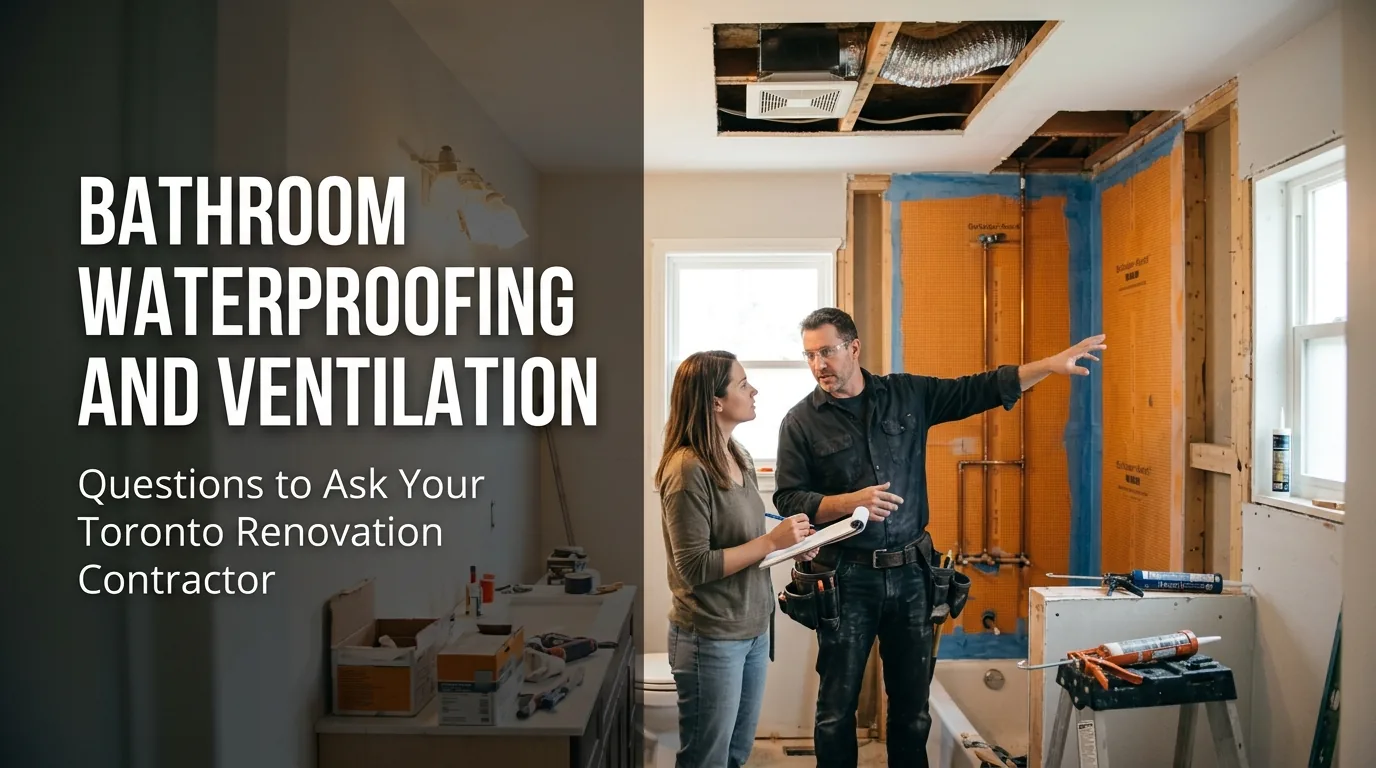
Bathroom waterproofing and ventilation decide how long a renovation lasts, and both disappear behind tile and drywall once the job is done. Ask which membrane system goes behind the tile, whether it gets a water test before tiling, and where the exhaust fan vents. Clear, specific answers point to a careful contractor.
A beautiful bathroom can hide a slow leak for years. By the time grout darkens or a ceiling stains below, the repair usually means tearing out the finished work.
Why the Hidden Layers Decide a Bathroom’s Lifespan
Tile and grout shed water, but they are not waterproof on their own. Water that gets through grout lines needs a continuous membrane behind it, or it reaches the wall framing and subfloor.
Ventilation handles the other half of the moisture problem. A ventilation factsheet from Health Canada lists mould growing in the home as a sign that ventilation needs to increase, and recommends letting bathroom fans run after showering or bathing.
Together, these two systems protect the structure, the finishes and the air quality. They are also the two things you cannot judge once the room looks finished.
Waterproofing Questions to Ask
Six questions expose how the waterproofing behind the tile will be built.
Which waterproofing system will you use?
Contractors should name a specific membrane system, such as a sheet membrane, a liquid-applied membrane or a foam board system. A vague answer like “we use good backer board” does not describe waterproofing.
Ask whether the system’s parts come from one manufacturer. Mixing components can affect how the manufacturer’s installation instructions and warranty apply.
How far does the membrane extend?
The shower walls and floor are the obvious wet zones. Ask whether the membrane also covers the tub surround, the area around a freestanding tub and the floor outside the shower.
Niches, benches and window returns inside a shower need special attention. Each one adds corners and seams where water can find a path.
Will you water-test before tiling?
A water test checks the waterproofing before tile covers it. Schluter recommends a water test before setting tile to confirm there are no leaks within its shower assembly.
Ask how the contractor runs the test, and whether you can see it or get a photo. A leak caught at this stage costs far less to fix than a full retile.
How are pipe penetrations and seams sealed?
Shower valves, shower heads and drain connections all pierce the membrane. Each penetration needs a sealing collar or gasket from the system’s manufacturer.
Seams between membrane sheets need overlaps or seam tape as the manufacturer specifies. Ask which method applies to the system on your job.
How is the shower floor sloped to the drain?
A shower floor has to slope toward the drain so water never sits on it. The drain also needs to connect to the waterproofing layer, so water that passes through grout still drains away.
Linear and curbless showers need extra planning here. Ask how the slope and drain will work before the subfloor is set.
What does the waterproofing warranty cover?
Waterproofing warranties vary in length and scope from one contractor to the next. Ask for the term in writing, what it covers, and whether it covers the repair of finishes as well as the leak itself.
Ventilation Questions to Ask
Six questions confirm the fan, duct and controls will actually clear moisture.
Where does the fan vent?
Bathroom exhaust fans should send moist air outdoors. A construction performance guideline from Tarion states that exhaust fans shall be ducted to the exterior in accordance with the Building Code, and should never be ducted into attics, soffits, basements or attached garages.
Moisture vented into an attic can condense on cold surfaces and damage the roof structure. Ask to see where the duct ends.
Is the duct insulated where it passes through cold space?
Warm, moist air cools quickly in an unheated attic. Natural Resources Canada warns that ducts running through attics exposed to extreme temperatures can cause moisture damage and energy losses.
Ask whether the duct is insulated and sloped so condensation does not drip back into the fan.
Is the fan sized for the room?
Fan capacity should match the size of the bathroom. A large ensuite with a steam shower needs more airflow than a small powder room.
Ask the contractor how they chose the fan’s rating. A specific answer based on room size beats “it’s the standard one.”
How is the fan controlled?
Fans on the same switch as the lights often run only while someone is in the room. A separate switch, a timer or a humidity sensor lets the fan keep running after a shower ends.
The City of Toronto advises turning on exhaust fans when bathing and showering as part of preventing mould.
Who wires the fan, and will ESA inspect it?
A new fan circuit or relocated fan counts as electrical work in Ontario. Ask which Licensed Electrical Contractor will do the wiring, who files the ESA notification, and when you will receive the Certificate of Acceptance.
Is the fan energy-efficient?
ENERGY STAR certified fans with lighting use 70% less energy on average than standard models, according to Natural Resources Canada. A quieter, efficient fan is also more likely to be left running long enough to work.
Who Inspects This Work?
Hidden bathroom work gets outside eyes at a few specific points, and knowing them helps you plan your questions. Plumbing changes that need a building permit trigger City inspections at rough-in, framing, insulation and plumbing final.
Fan wiring and any new circuits fall under ESA rules. The Electrical Safety Authority requires almost all electrical work to be reported through a notification of work, and hired work must be done by a Licensed Electrical Contractor.
The waterproofing membrane itself usually gets no outside inspection at all. That makes the contractor’s water test, and your photos of it, the main proof that it was installed correctly.
Moisture and Health: Why Ventilation Is Not Optional
Lingering bathroom moisture affects more than the drywall. Video guidance on mould from Health Canada advises using exhaust fans when showering, measuring humidity and keeping it low.
The same guidance links mould exposure to worsening asthma symptoms and allergic reactions. For households with asthma or allergies, fan performance deserves the same attention as tile selection.
Answers That Should Make You Pause
Some answers signal that a contractor may be cutting corners on the hidden work.
| Contractor’s answer | Why it’s a concern |
|---|---|
| “Grout and sealer keep the water out.” | Grout is not a waterproofing layer |
| “We don’t need to test it.” | A pre-tile water test is the only chance to catch leaks cheaply |
| “The fan can vent into the attic.” | Moist air in the attic leads to condensation damage |
| “Any membrane works with any drain.” | Drains and membranes need to be compatible |
| “The warranty is verbal.” | An unwritten warranty is hard to enforce |
A careless answer here usually means the hidden work was never planned in detail.
What to Document Before the Tile Goes Up
Photos taken during construction become your record of the hidden work. Ask your contractor to share them, or take them yourself at each stage.
- The membrane on every wall and floor, including corners, niches and seams
- The water test in progress, with the drain plugged
- Pipe penetrations with their sealing collars
- The fan duct connection and where it exits the house
- Product labels or data sheets for the membrane and drain
Store the photos with your contract and warranty. They help with any future claim, and they tell the next owner what sits behind the walls.
Warning Signs After the Renovation
Problems with waterproofing or ventilation tend to show up in the first year or two. The City of Toronto lists musty odours, condensation and discoloration as signs of a moisture problem.
Watch for these in and around the new bathroom:
- Grout that stays dark long after a shower
- Loose or hollow-sounding tiles near the shower
- Peeling paint or bubbling on the ceiling
- Stains on the ceiling of the room below
- Mirrors and windows that stay fogged well after the fan has run
Report any of these to your contractor promptly, in writing, and while the warranty is still active.
Your Waterproofing and Ventilation Questions
How long should a bathroom fan run after a shower?
Health Canada recommends letting bathroom fans run after showering or bathing. A timer or humidity sensor makes that easy without relying on memory.
Is tile backer board waterproof?
Some backer boards are designed as waterproof systems, while others only resist water. Ask the contractor which type is going in and whether it forms part of a complete waterproofing system.
Does a bathroom fan need to vent outside?
Yes. Tarion’s guideline states that exhaust fans shall be ducted to the exterior in accordance with the Building Code.
Can poor ventilation cause mould?
Poor ventilation leaves moisture in the room, and lingering moisture helps mould grow. Health Canada treats visible mould as a sign that ventilation should increase.
Should the membrane go on the bathroom floor outside the shower?
Many contractors waterproof the full floor in bathrooms with a curbless shower or a tub, since water travels beyond the shower area. Ask what your contractor recommends for your layout, and why.
What should a waterproofing warranty include?
A useful warranty states its length, what it covers and whether it includes repairing finishes. Get it in writing before work begins.
Wrapping Up
Waterproofing and ventilation are the two parts of a bathroom renovation you will never see again once the tile is set. Ask about the membrane, the water test, the drain slope, the fan duct and the controls before you sign.
A contractor who answers each question specifically, and lets you see or photograph the work, is giving you the best evidence available that the hidden layers are done right.